

ASTROPHYSICIST FRANCO GIOVANNELLI
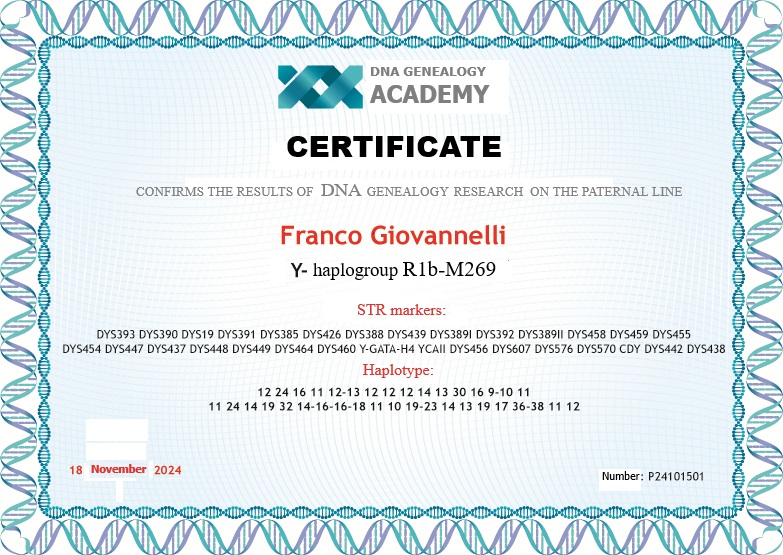
Haplogroup: R1b-BY250
Branch: Eurasian
Authors:
Vladimir Mikhailovich Lipunov, Doctor of Physical and Mathematical Sciences, Honorary Professor of Lomonosov Moscow State University
Researchers of the DNA Genealogy Academy: I.L. Rozhansky and V.I. Merkulov.
Franco Giovannelli
--------------------
Franco Giovannelli* (born June 24, 1942) is an Italian astrophysicist, Honorary Senior Researcher at the Institute for Astrophysics and Space Planetology of the National Institute for Astrophysics in Rome.
--------------------
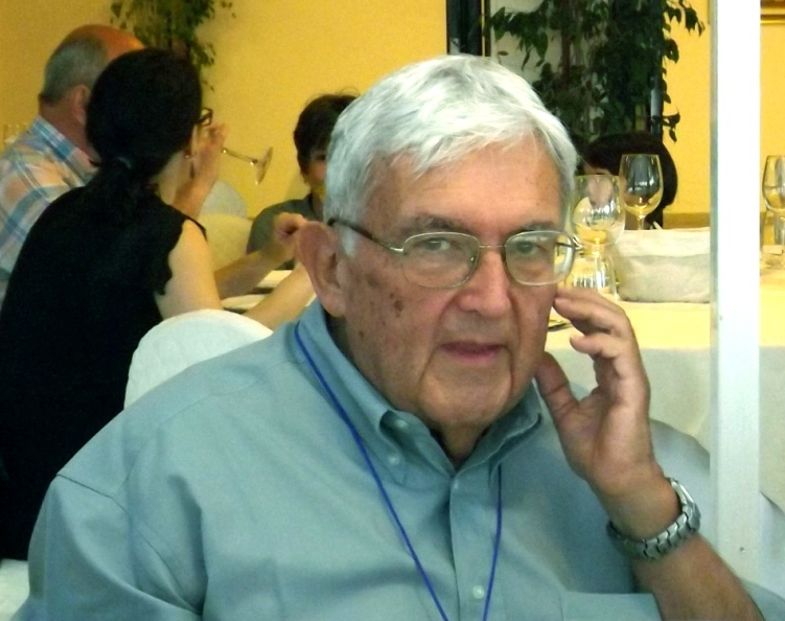
Franco Giovannelli is a well-known Italian astrophysicist working in high-energy astrophysics. With his exceptionally broad outlook, for almost half a century he has managed to bring the best specialists from very distant fields of astronomy to international forums. His superb review talks focus on the most enigmatic and profound problems of the universe, from the origin of the Universe to the origin of intelligent life. Franco is in fact a remarkable example of a vanishing class of universalists, who not only publish their own original research but also informally guide the research of their colleagues.
In his youth Franco earned a diploma as a nuclear energy specialist at the Fermi Institute and a degree in physics at La Sapienza University, both in Rome. He then received a doctorate in physics from the University of Barcelona (Spain). He took part in the design and construction of many detectors used in experiments on Earth and in space. He is a pioneer in multichannel astrophysics. He used ground-based telescopes at many international observatories (ESO, La Palma, Teide, Calar Alto, El Leoncito, Loiano, and Serra La Nave telescopes) together with space observatories: the Soviet ASTRON X-ray and ultraviolet telescopes and IUE, very often simultaneously with optical and IR telescopes.
Franco Giovannelli among the guests of honor of the international conference "The Universe Through the Eyes of Robots" (Moscow, Sparrow Hills, MSU Observatory, founded by M.D. Perevoshchikov):
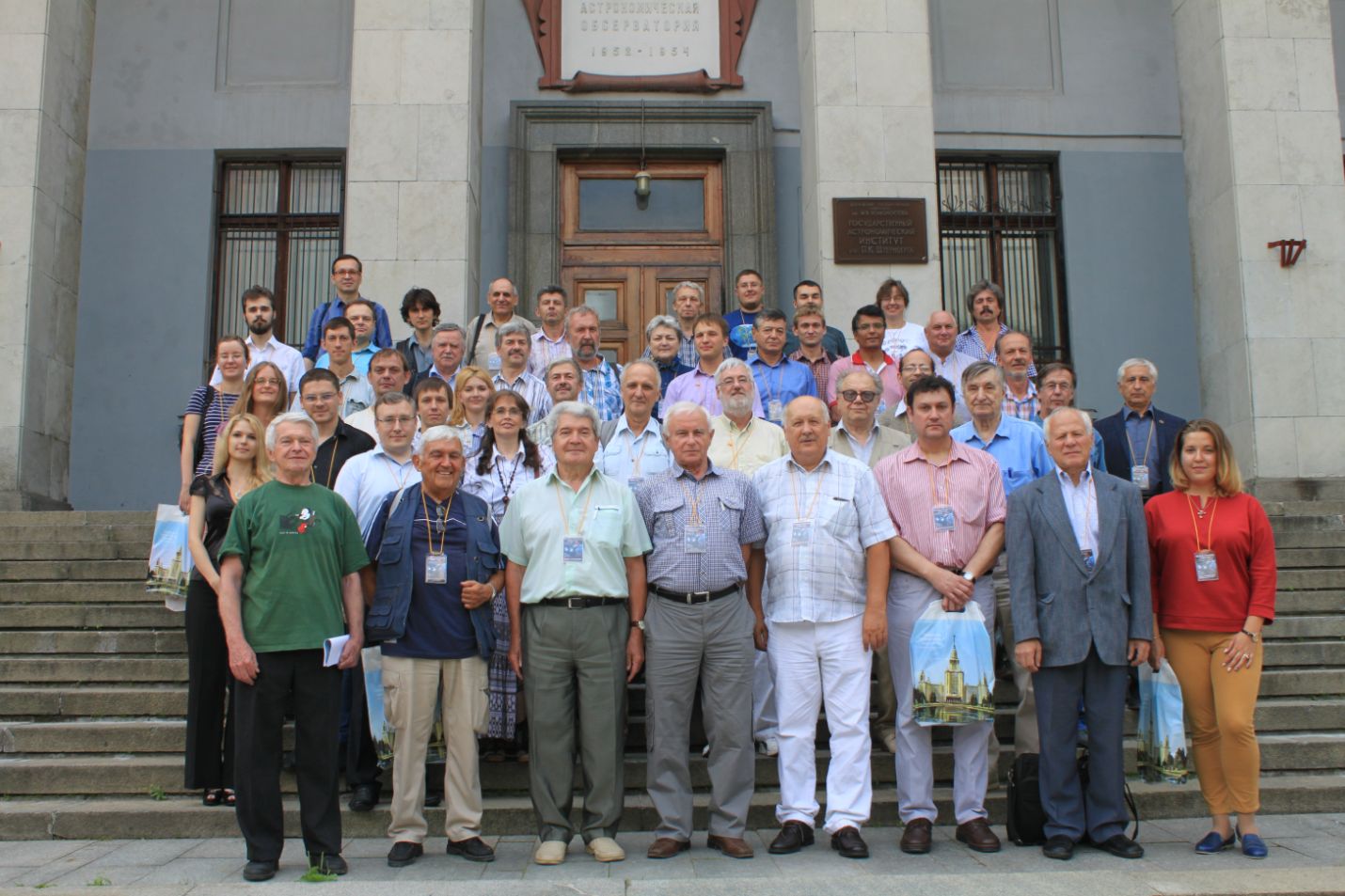
Franco is standing second from the left in the front row.
One of the authors (V.L.) writes:
«I met Franco Giovannelli back in Soviet times, when he invited me, then a soon-to-be Doctor of Sciences, to a conference that was already famous. It took place on the Island of Volcanoes in the Mediterranean Sea. Franco immediately struck me with his breadth of outlook, and not only a scientific one. On the very first evening, when participants traditionally get to know each other at international conferences, he organized a small reception called the Etruscan Party. His ancestors come from Populonia, the area adjoining the Tyrrhenian coast where the Etruscans settled more than 3,000 years ago. According to family tradition, he counts himself among their descendants. After the conference we returned to the mainland, and Franco led a tour of an ancient Etruscan city, founded on the hills some 700 years before the founding of Rome…
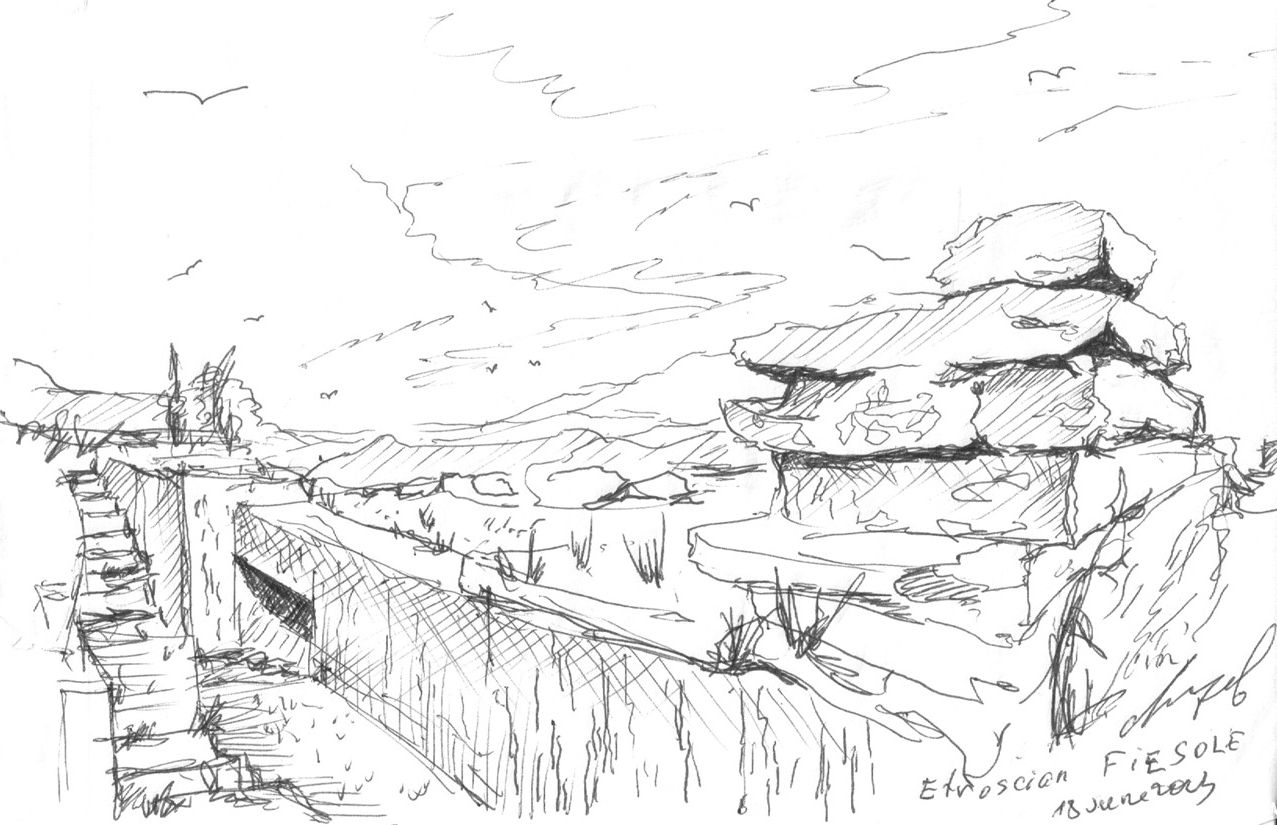
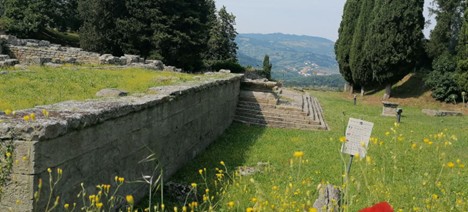
Ancient ruins of an Etruscan city in Fiesole, on the outskirts of Florence (drawing by V.L., 2023).
And although we met almost every year at various conferences and were becoming not just colleagues but friends, withdrawing from the crowd for long, always interesting conversations about everything, I hardly thought about the Etruscans for almost 30 years… Only in 2018, when I learned about DNA genealogy and suddenly realized that a completely new channel of information about the past of peoples had appeared, and a natural-science one at that, did I really begin to delve into history. And suddenly it turned out that the very ruins Franco had taken me to were the city of a people who gave the world all the great discoveries that history textbooks attributed to Ancient Rome. It was then that I began to look forward with particular impatience to our next meeting, if not with a descendant of the Etruscans, as the Giovannelli family legend told, then certainly with an expert on their history. So, at his suggestion, I went to Populonia, south of Livorno along the Tyrrhenian coast, where the Etruscans first settled on the Apennine Peninsula. I began visiting ancient cities and museums in Tuscany. And in the end I decided to do a DNA analysis of my friend, the "Etruscan".»
Can his family legend be tested from the standpoint of DNA genealogy? Today the first results of paleogenetic testing are known, not only for the historical Etruscans but also for those who lived on their lands in later eras. So I decided to try. The study was carried out by colleagues from the DNA Genealogy Academy, I.L. Rozhansky and V.I. Merkulov.
Franco Giovannelli's haplotype was obtained and belongs to the large subclade R1b-M269. This is an ancient DNA lineage that has since diverged into hundreds of sub-branches, whose representatives now live from Western Europe to the Middle East and the Transcaucasus. To refine the initial assignment, a DNA-genealogical tree of haplotypes was built. To avoid statistical bias, the search was limited to haplotypes of the R1b-M269 subclade whose carriers reported roots in Italy.
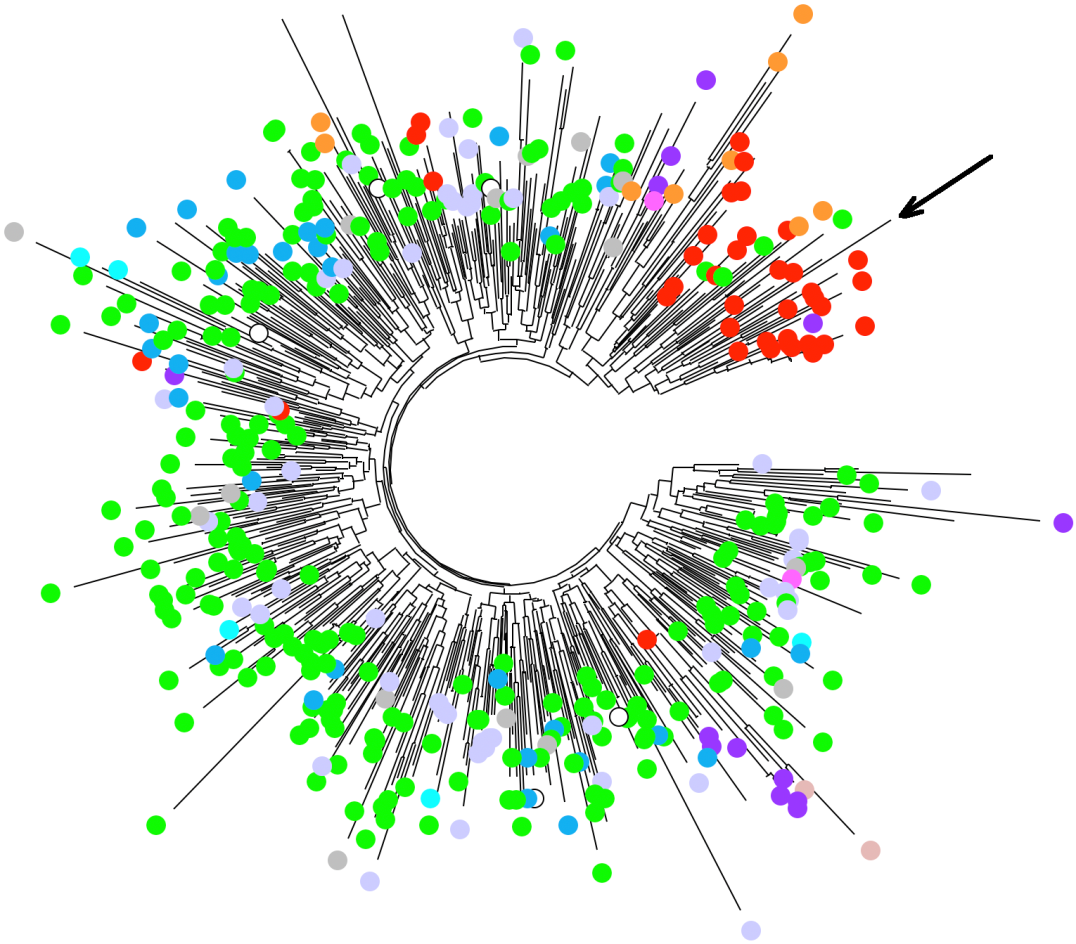
On the DNA-genealogical tree, Franco's haplotype grouped with the haplotypes of modern participants belonging to the branch M269 > L23 > Z2103 > Z2106. This is one of the oldest and best-studied branches of haplogroup R1b, largely thanks to research on the Yamnaya archaeological culture, in which the subclade Z2103 and the Z2106 descending from it were the main DNA lineages.
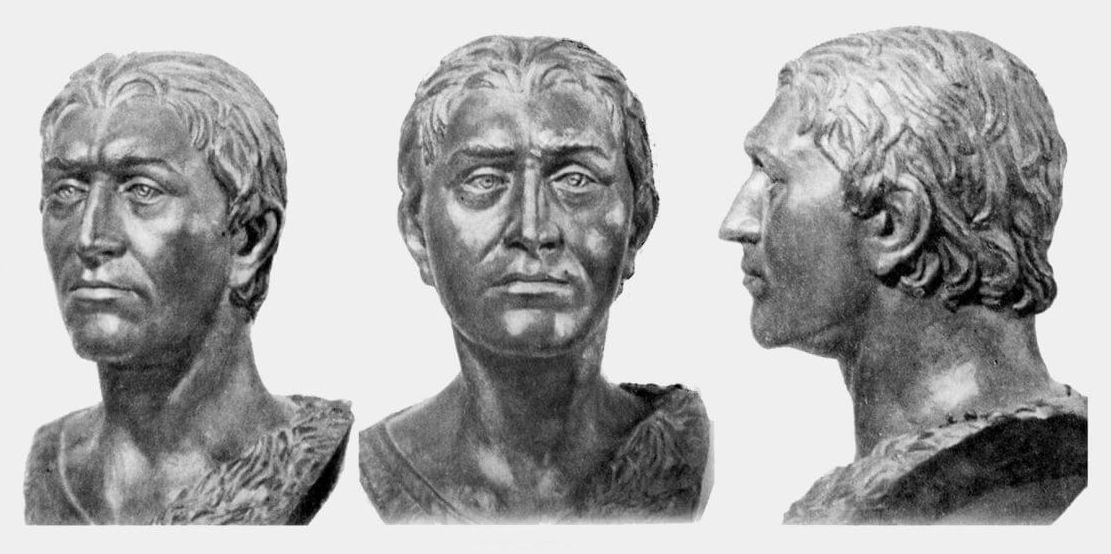
The Yamnaya cultural-historical community is one of the key cultures of the Bronze Age. Its name comes from a characteristic feature of the burial rite, in which the dead were buried in "pits" (yamas) covered with earthen mounds (kurgans). The culture occupied a broad steppe zone from the Urals to the Danube; its bearers led a nomadic lifestyle and raised horses and cattle. There is a hypothesis that the "Yamnaya people" were the first to master horse riding. This is still debated, but at the very least they used horses as draft animals, and the remains of carts with solid wheels are found in excavations. Anthropological reconstruction gives an idea of what these people looked like (using remains from a burial in the Volgograd region as an example).
Dairy farming first appeared in the Yamnaya culture, and dairy products became an important part of the diet. The result was accelerated population growth and improved anthropometric indicators. People of earlier steppe cultures hardly consumed dairy products, let alone the farmers of that time.
The subclade R1b-Z2106 in turn also splits into a large number of daughter branches of various hierarchical levels, the most significant of which are shown in the following diagram. On the right, the designations of these branches are given in the two main alternative notations.
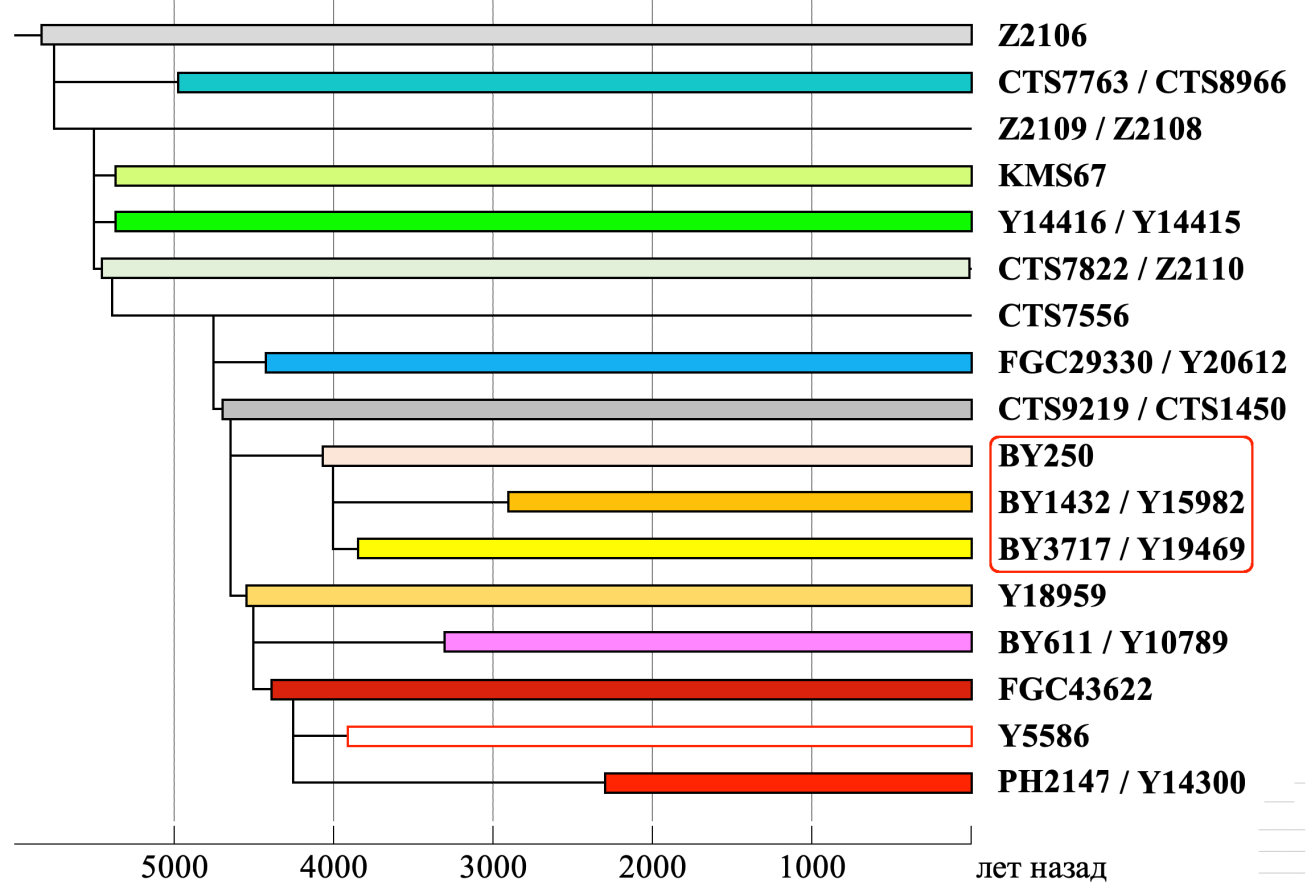
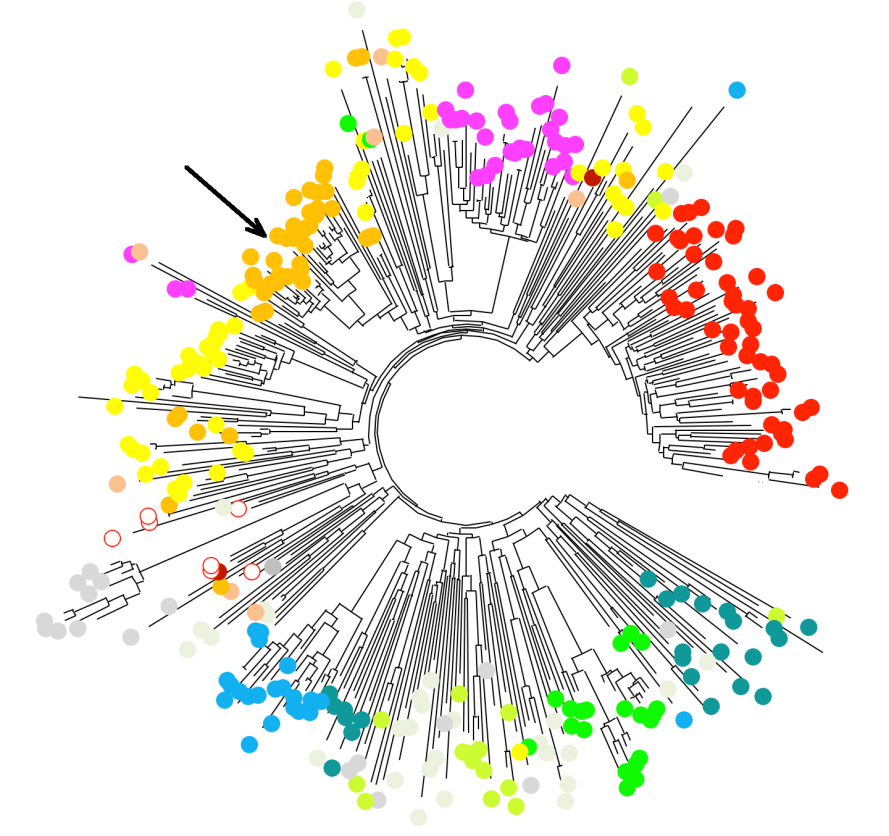
In the course of further analysis the DNA-genealogical tree was refined, and the calculation was performed only for haplotypes of the R1b-Z2106 subclade. This time Franco's haplotype fell into the deep branch Z2106 > Z2109 > CTS7822 > CTS7556 > CTS9219 > BY250. In the "beige" branch BY250, haplotypes from the related sub-branches BY250 > BY1432 and BY250 > BY3717 turned out to be intermixed. Giovannelli ended up in the same cluster. The color designations of the branches on the tree are the same as in the phylogenetic diagram above.
As is known, the history of haplogroup R began in eastern Siberia about 30 thousand years ago. Later, the descendants of that most ancient Siberian population moved westward. The earliest R1b fossil sample by archaeological dating was found in Italy (12230–11830 BC). An archaic branch of the related haplogroup R1a was found in the Arkhangelsk region of Russia (9155–8655 BC). The earliest traces of the subclade R1b-M269 are associated with the foothills of the North Caucasus and the Stavropol region. Those people were from cattle-breeding tribes who lived 5,600–5,900 years ago and were buried in kurgans according to the rite characteristic of the Maykop archaeological culture.
The people who created the Maykop culture were of varied origin. Some were descendants of migrants from the Transcaucasus; others were descendants of steppe tribes, which included representatives of the subclade R1b-M269, who adopted many skills and traditions from their neighbors. Several centuries later, the DNA lineage M269 > Z2103 became the main genealogical line in the Yamnaya archaeological culture, which dominated the steppe zone of Europe in that era. The earliest fossil sample associated with it was found in the Samara region.
The complex processes of ethnogenesis that took place over the centuries in the Great Steppe led to part of the descendants of the "Yamnaya people" migrating to the Transcaucasus and Asia Minor. Samples from the Middle Bronze and Iron Ages have also been found in Central Europe and Italy, but they are many times fewer in number than carriers of the "western" subclade R1b-P312. Among modern Italians, the share of Z2106 representatives is no more than 2%. The Giovannelli family belongs to this "eastern" subclade of haplogroup R1b.
Ancient ruins of an Etruscan city (photo V.M., 2023):
The spread of lines from the P312 subclade occurred mainly through people of the mysterious Bell Beaker culture, which in a comparatively short time (from 4600 to 4400 years ago) covered all of Western and part of Central Europe. Paleogeneticists date samples from Spain, France, Germany, the Czech Republic, Hungary, and Poland to this time. In the Iron Age their descendants formed the basis of the Celts and the Italic peoples. Fossil samples from the R1b-P312 subclade dated 4100–4300 years ago were found near Palermo in Sicily. A somewhat later sample, about 4000 years ago, comes from Parma in the Emilia-Romagna region. By archaeological context they are linked to the Bell Beaker culture, whose material traces are found in northern Italy and western Sicily. Probable descendants of those people make up a significant part of modern Italians, from 45–55% in the north of the country to 22–28% in the south.
The question of which languages they brought with them remains open, because people buried in the necropolises of both the Etruscans and the Romans of the royal and early republican periods belong to the subclade R1b-P312. In particular, in the Etruscan necropolis in the commune of Civitella Paganico, near Sassetta, the subclade P312 was identified in 5 of 6 men buried there between 530 and 200 BC.
There are few fossil samples from the "eastern" branch R1b-Z2103 in Italy. The earliest date to the Republican period of Roman history, when settlers from the Eastern Mediterranean and North Africa began to appear there. Their flow intensified after the victory in the Punic Wars and peaked in the imperial era. The subclade R1b-Z2103 is widespread east of Italy, so its representatives could have been among the migrants of that wave.
To find out which option is more likely, we should look more closely at the branch R1b-BY250, from which the Giovannelli family descends. According to specialists' calculations, the most recent common ancestor of modern representatives of this branch lived between 4400 and 3300 years ago, several centuries later than the Yamnaya culture. Its modern geography is shown on a map compiled from data from several DNA projects.
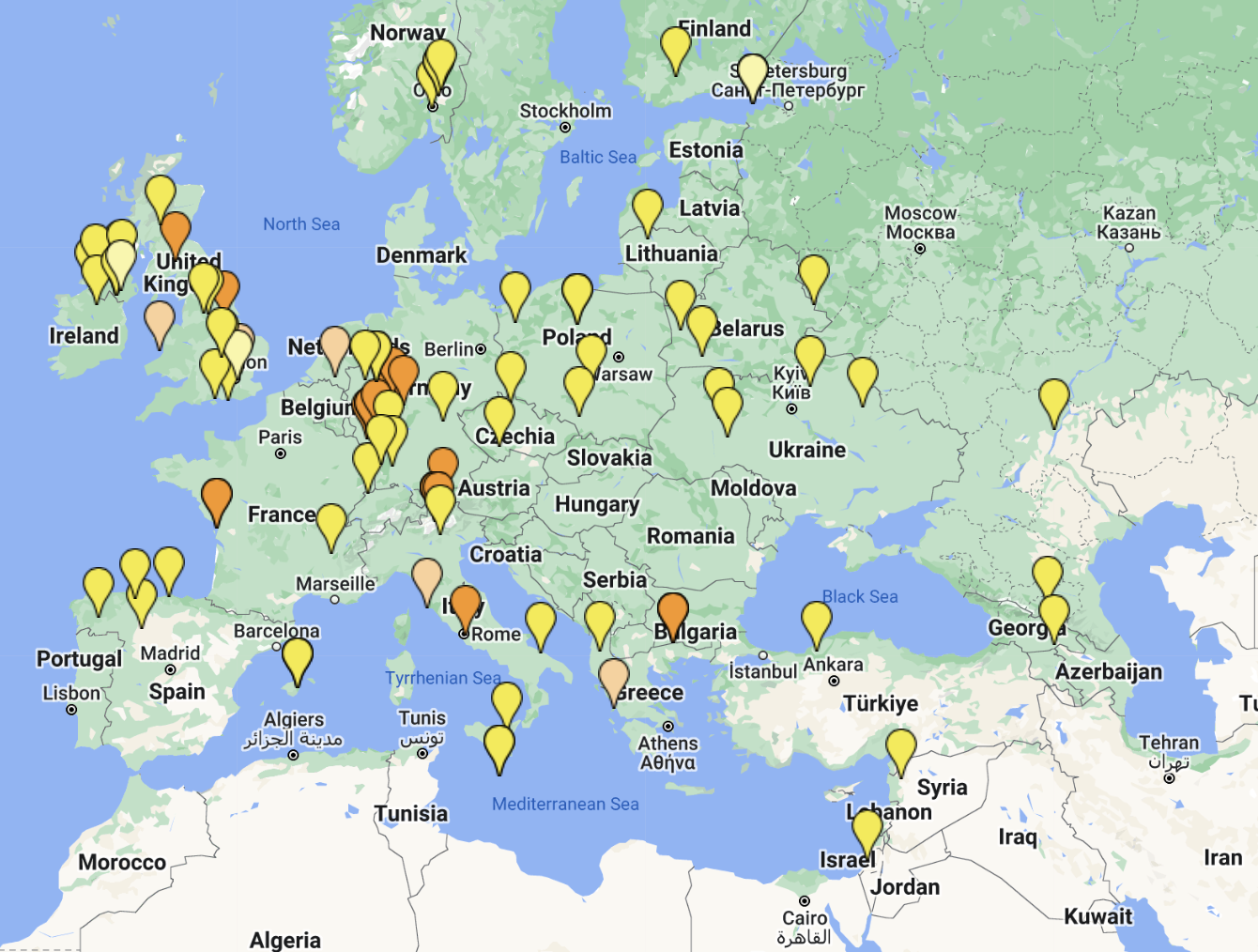
As we can see, contemporary members of the R1b-BY250 branch are scattered over a wide area, with no pronounced attachment to any particular region. The predominance of Britons and Germans is caused primarily by their high activity in commercial DNA testing, which makes it possible to detect lines present at the level of tenths and even hundredths of a percent.
Activity can be judged by the fact that the list of BY250 representatives used in the calculation includes 13 family groups whose participants were tested purposefully in private genealogical projects. They are mostly from the USA, but there is one group from Italy, from the commune of Caldes in the province of Trento in the northeast of the country. Their founder, from the Ladin ethnic group, lived in the 14th century, which agrees with the DNA calculation results. If natives of Eastern Europe and the Mediterranean showed the same activity, the map would certainly look different. For this reason it is still difficult to establish where the founding ancestor of modern participants from the BY250 branch lived, by what routes, and as part of which peoples his descendants migrated.
For example, the Ladins (the source text says "Latins", apparently a slip) belong to the Romansh peoples who live in northern Italy; today they number about 30–35 thousand people. Their ancestors are considered to be the Rhaetians, an ancient people whom ancient authors identified with the Etruscans. Strabo wrote that "the land of the Rhaetians extends to the part of Italy lying above Verona and Como, and also reaches the places through which the Rhine flows."
If we take into account participants with roots in the Mediterranean and the Middle East, as well as representatives of the Jewish sub-branch consisting of 8 participants, then the homeland of the ancestors may have been southeastern Europe, where at that time people of the R1b-Z2106 subclade made up a noticeable share of the local population according to fossil DNA. The Balkan and Apennine peninsulas are separated by the Adriatic Sea, which had been actively used for navigation since antiquity, so this route also seems likely for the appearance of Franco Giovannelli's ancestors in Italy.
However, no fossil finds from the subclade R1b-BY250 are known yet, so the early history of this rare branch is still a mystery. What is beyond doubt is, perhaps, the more ancient origin of the Giovannelli family from the Yamnaya archaeological culture of the Bronze Age of the Russian Plain. On the one hand this is rather unexpected, but on the other, the test results point to it directly.
Such are the DNA-genealogical adventures of the future Italians on the territory of the future Russia. So Franco is not a stranger to us at all.
*) The transliteration of the first and last name is given at the author's insistence.
April 25, 2025


